Our vision is to create and celebrate opportunities for all children to achieve their potential in speech, language and communication, working together with and in response to the local needs of local communities.
Why? ‘We believe that quality interactions lie at the very heart of a successful modern society. More than ever, we need to make sure that our children grow up to be confident to express thoughts, ideas and feelings, as well as respond to those with whom they will share both they’re working and social lives’ (Melanie Packer, Nursery World 2016). The research tells us that not all children are doing as well as they could or should be doing. Each September we hear or read in the press how children starting school are ‘not ready’ and poor language skills are cited as the biggest barrier to smooth transition and success within school life.
What the research tells us: The ‘time to talk’™ programme is founded upon an established evidence base (The Cost to the Nation Report published by I CAN, 2006, and ‘Save the Children, 2015, Investigating the role of language in children’s early educational outcomes published by Roulstone et al., 2011) that recognises that:
- Language acquisition in the early years is a strong indicator of later academic achievement
- Social inequalities impact negatively upon a child’s opportunities for language learning
Poverty has been identified as a key social determinant that put babies and young children at risk of speech and language delays; with potentially long term negative repercussions for employability, mental health and continued poverty in adulthood (e.g. Law et al., 2013).
The ‘time to talk’™ programme, is committed to ensuring that all children have the opportunity for the best start in life. Local assessment in Warwickshire demonstrated that in 2015, 1 in 3 children were not school ready. ‘time to talk’™ places an emphasis on increasing the number of children that access school with the language skills necessary for school entry. In 2014 the Ofsted Early Years Report (EYFS_framework_from_1_September_2014__with_clarification_note) highlighted 10 skills as essential for school readiness. 8 out of 10 of these skills were language based skills. In 2015, Ofsted EY inspectors wrote: “the quality of teaching was paramount in helping more disadvantaged children to progress well.” The need to ensure that all children have the best opportunities to develop as strong communicators and ready for school needs to remain high on the nation’s agenda (Communication Trust 2016, NAHT & Family and Childcare Trust 2017).
The ‘time to talk’™ programme is led by a small team of Speech and Language Therapists, employed by South Warwickshire Foundation NHS trust. Collaboration is central to meeting our aims. We work with and support families, early years practitioners, volunteers and other professionals (e.g. health visitors and librarians) within the local community.
The ‘time to talk’™ team include:

Louise Perry completed a BSc (hons) in Speech and Language Pathology at the University of Strathclyde in 2005. Following a jaunt around the world to explore some distant countries, Louise settled in Warwickshire working at South Warwickshire NHS Foundation Trust as a Preschool Speech and Language Therapist. Louise has a passion for supporting the youngest children develop their early communication skills and this brought her into the ‘time to talk™’ team in 2010. She also has a vision for joint working as she has seen the benefits this brings to the families she meets. Louise’s experience and insight has allowed for the development of her role within the team and she now co-ordinates the delivery of the ‘time to talk™’ strategy in Warwickshire. Louise works three days a week in the team and has three young boys keeping her busy for the rest of the week!
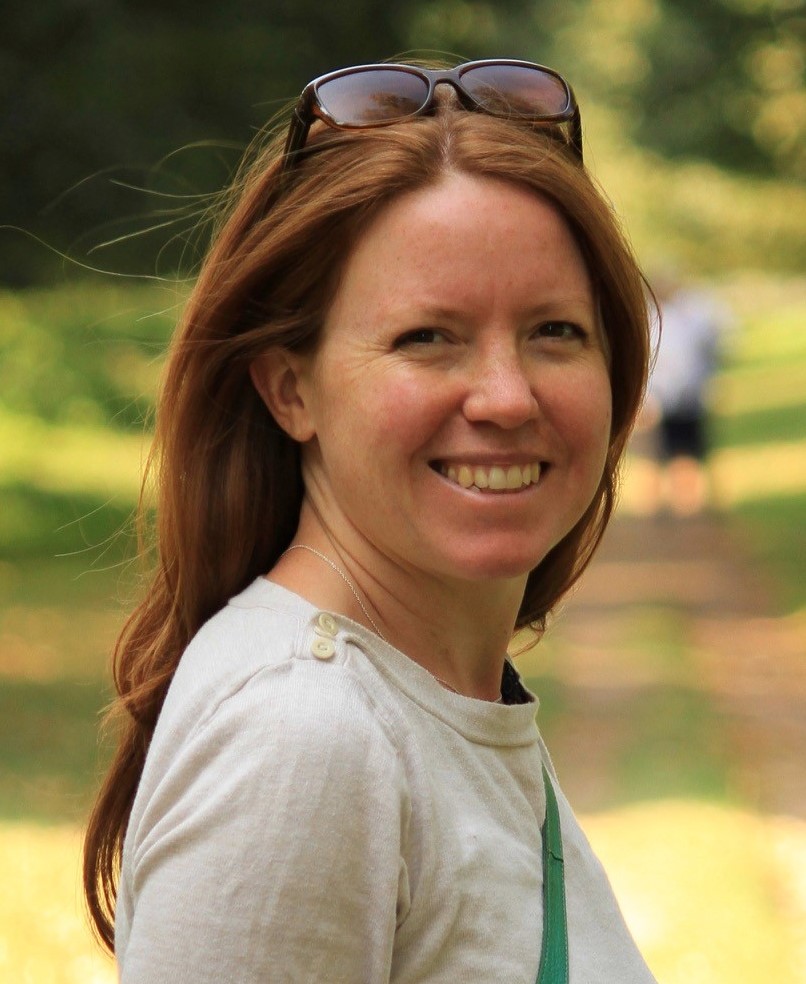
Alice Goode started working with the South Warwickshire University NHS Foundation Trust, Speech & Language Therapy team as an assistant in 2008. She undertook her degree alongside this role and gained her BSc (hons) in Speech and Language Therapy from Birmingham City University in 2015. She has worked with both adults and children of all ages during this time, which has fuelled her dedication to ensuring that support for those presenting with Speech, Language and Communication needs are available at each step in an individual’s life. Having previously collaborated with the team on specific projects, Alice officially joined the ‘time to talk™’ team in 2022. Alice is excited to be able to support implementation of the ‘time to talk™’ strategy, with a focus on early support for the development of communication skills within the youngest members of our Warwickshire community.

Lucy Dempster joined the ‘time to talk’ team in September 2025. She brings her vast experience of working with preschool children in Warwickshire to the role and has been the driving force in implementing the ‘lets talk’ advice line.

Elizabeth Roche is the clinical Lead for the Preschool Speech and Language therapy team at South Warwickshire University NHS Foundation Trust. She oversees the delivery of the ‘time to talk’ strategy on behalf of the NHS and also gets involved in training when she can! Elizabeth brings many years of experience to the team!
Our principles:
prevention – advice, support and information should be available to prevent children falling behind in their speech, language and communication skills
early identification – children should be identified early and accurately by appropriately trained practitioners.
early intervention – intervention should be high quality, flexible and responsive to need especially for the most disadvantaged.
easy to access support – services should be easy to access at all levels of need with extra consideration for those families who previously have not engaged.
high quality and effective training – if identification and intervention is to be appropriate and effective training should be delivered by specialists in speech and language therapy.
integrated and holistic service – intervention should be part of a pathway of support delivered in partnership and built around the child and family
communication friendly environments – children should have access to communities and spaces that resource and facilitate communication as appropriate to their stage of development
How do we do it?
Implementing the strategy: – implementation of the strategy enables high quality interactions and opportunities for children use and development the communication skills that they need now and in later life. We providing training, and ongoing support and development for Speech and Language Champions, cluster meetings, tailored Continuing Professional Development, an annual conference and celebration, peer support, email or telephone support and mentoring, support with language enrichment and partnership working.
Training: we provide comprehensive training that equips practitioners with the knowledge and skills that they need.
Joint working: we can’t achieve our vision on our own. We have a number of existing partners who we work closely with in Warwickshire e.g. development of the 2 year integrated review, SLT drop-ins, joint champion and SLT intervention, working with library staff.
Campaigning: we are keen to raise awareness of relevant issues and ways to bring speech, language and communication development, especially during ‘chatter matters week’.
Innovation: ‘time to talk’™ has developed its own training, information (including the family webpage) and resources e.g. the ‘abc’ of talking with me book.
Collecting evidence and measuring impact: we collect evidence and evaluate everything we do.
‘time to talk’™ supports over 160 early years settings across Warwickshire.
 Warwickshire's Speech, Language & Communication Strategy for 0-5s